
This post contains affiliate links.
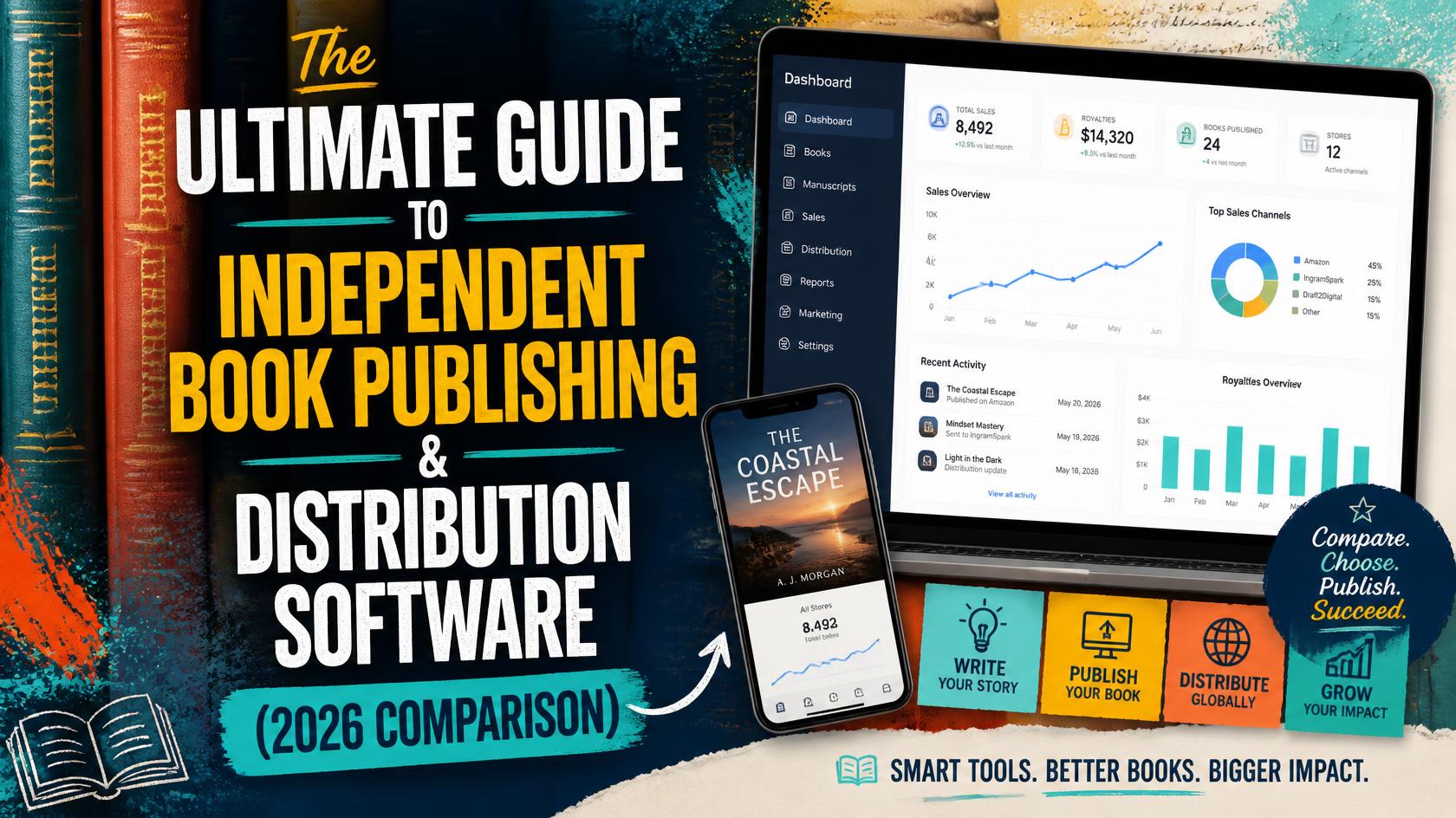
On Siren Stories, compare the leading 2026 independent book publishing and distribution software platforms to find the best tools for maximizing your book sales and royalties.
Independent authors can bypass traditional publishing gatekeepers and retain total creative control while maximizing profit margins by choosing the right digital publishing and distribution software.
Publishing a book today requires more than just writing a compelling manuscript. Authors must manage formatting, global distribution, retail optimization, and financial tracking across multiple platforms.
Navigating the software landscape can feel overwhelming. This guide compares the leading publishing and distribution tools available to help authors choose the best platform for their career goals.


IngramSpark: Global Reach and Wholesale Distribution
IngramSpark is an industry giant for print-on-demand and global distribution. It connects indie authors to thousands of bookstores, libraries, and online retailers worldwide.
The platform offers two primary formats: physical print books and digital ebooks. Physical books become available to major brick-and-mortar stores through Ingram’s vast wholesale network.
Authors gain access to global markets in the United States, United Kingdom, Australia, and continental Europe. Retailers and libraries use Ingram catalogues to stock physical titles on demand.
Pricing includes setup fees for both print and ebook formats. However, IngramSpark frequently runs promotional codes that waive these initial fees.
Returns policies are a critical feature for bookstore placement. IngramSpark allows authors to set returnable status, which traditional bookstores require before stocking independent titles.
File preparation requires strict adherence to technical guidelines. Margins, bleed settings, and PDF specifications must be precise to avoid rejection or printing errors.
Customer support relies primarily on ticket systems. Response times vary, so authors need to prepare their files correctly before uploading.

Draft2Digital: Simplified Ebook and Audiobook Distribution
Draft2Digital streamlines the distribution process for authors who want to reach multiple retail platforms without managing separate accounts for each store.
The platform distributes ebooks to major outlets like Apple Books, Barnes and Noble, Kobo, and Google Play. It also reaches international subscription services and library networks like OverDrive.
Instead of taking an upfront fee, Draft2Digital operates on a percentage model. They take a modest cut of roughly ten percent from the royalties earned on each sale through their network.
Automated formatting tools convert raw Word documents into professional-looking ebooks. Authors can select from a variety of built-in chapter headers and layout templates.
Print-on-demand is also available through partnerships with print providers. Authors can manage both physical and digital editions from a single dashboard.
Promotional tracking tools help monitor sales trends across different retailers. The centralized dashboard displays earnings summaries without requiring users to log into five different seller portals.
Customer service has a strong reputation within the indie author community. Support agents typically respond quickly to troubleshooting requests and formatting questions.

Amazon KDP: The Dominant Marketplace
Amazon Kindle Direct Publishing dominates the independent publishing market due to Amazon’s massive customer base and search volume.
KDP offers free setup for both Kindle ebooks and paperback books. Hardcover printing options are also available through the same unified dashboard.
Royalties vary based on pricing tiers and geographic distribution. Ebooks priced between $2.99 and $9.99 generally earn a seventy percent royalty rate on Amazon stores.
Enrollment in Kindle Unlimited provides access to a lucrative subscription reading pool. Authors earn revenue based on the number of pages read by subscribers rather than traditional per-book sales.
Exclusivity is a requirement for Kindle Unlimited participation. Ebooks enrolled in this program cannot be sold digitally on other platforms like Apple Books or Kobo.
Paperback and hardcover printing utilize Amazon’s print-on-demand infrastructure. Books are printed as customers order them, eliminating the need for bulk inventory storage.
Reporting tools update in real time. Authors can track daily page reads, KENP earnings, and book sales instantly through the main reporting tab.
Smashwords: The Pioneer of Indie Aggregation
Smashwords pioneered independent ebook distribution before merging operations with Draft2Digital to create an even stronger unified network.
The platform specializes in distributing titles to independent bookstores and global library markets. Authors still use the Smashwords storefront for direct sales to readers.
Pre-orders are managed effectively through the platform. Authors can set up upcoming releases months in advance to build anticipation and secure initial ranking momentum.
Direct sales features allow creators to set custom coupon codes and promotional discounts. Authors keep a higher percentage of revenue on direct sales transactions processed through the platform.
The Smashwords Style Guide remains a foundational resource for independent formatters. It teaches writers how to clean up word processing files so they convert properly across all digital devices.
Metadata optimization tools help books appear in relevant search categories. Proper tagging ensures algorithms match titles with interested readers.

PublishDrive: Subscription and Global Expansion
PublishDrive targets authors and small presses looking for global expansion, especially in non-English markets and subscription models.
The platform operates on a flat-fee subscription pricing model rather than taking a percentage of royalties. Authors keep one hundred percent of the royalties earned from all retail channels.
Distribution extends to over four hundred store networks worldwide. This includes specialized channels in Asia, Africa, and Eastern Europe that standard aggregators often miss.
Digital audiobooks can be distributed alongside ebooks and print books. PublishDrive connects creators with library systems and streaming audio platforms.
Collaborative publishing tools allow multiple users to manage a single account. Small presses and collaborative writing teams find this feature particularly useful for tracking expenses and revenue splits.
In-app promotional tools help secure merchandising placements in major stores. Authors can apply for featured spots directly through the PublishDrive dashboard.
Lulu: Print-Focused Publishing and Bookstore Integration
Lulu focuses heavily on print-on-demand flexibility, calendar creation, and direct-to-consumer sales channels.
Global distribution options allow print books to reach online retailers like Amazon, Barnes and Noble, and global wholesale networks.
Volume discounts benefit authors who want to order physical copies for local events, book signings, or direct mail campaigns. Shipping rates scale reasonably with bulk orders.
The platform provides free templates for cover design and interior layout formatting. These tools help beginners create industry-standard files without hiring external designers.
Lulu Direct integrates with Shopify and WooCommerce stores. Authors can sell physical books directly from their personal author websites while Lulu handles printing and fulfillment automatically.
Payout structures are straightforward. Earnings accumulate monthly and transfer directly to PayPal or bank accounts once minimum thresholds are met.
Making the Final Software Decision
Choosing the right combination of publishing software depends on your specific business model and distribution strategy.
Authors targeting maximum digital revenue often pair Amazon KDP Select with Draft2Digital for non-Amazon channels. This captures both exclusive subscription pools and wide retail markets sequentially.
Writers prioritizing physical bookstores should incorporate IngramSpark or Lulu into their workflow. Returnable wholesale options open doors to local independent shops and libraries.
Evaluate setup costs, royalty retention, and technical support before committing manuscripts to any single provider. Testing a short story or novella through a platform first helps new publishers learn the software mechanics safely.
Author

judieannrose@live.co.uk
Related posts

The Ultimate KDP Formatting Guide: How To Format Your Book Like A Professional In 2026
Formatting a book for Amazon Kindle Direct Publishing involves preparing manuscript files so digital e-readers and physical print-on-demand presses render the text...
Read out all
20 Halloween Poetry Prompts To Unlock Your Darkest Creative Ideas (Prompt #14 Is Pure Nightmare Fuel!)
Selecting a prompt at random and setting a ten-minute timer helps bypass hesitation. Starting with a single sensory detail, such as cold...
Read out all
150 Rhyming Word Pairs For Poets
You need the right rhyme to finish your poem. Searching for words can slow you down and break your flow. This list...
Read out all
20 Gothic Horror Books For Dark Academia Lovers (These Haunted Stories Are Impossible To Forget!)
Readers who love dark academia, worn book jackets, rain against tall windows, and stories that make knowledge feel dangerous will find a...
Read out all
17 Epic Fantasy Series That Will Transport You To Another World (You Can’t Miss #6!)
This curated collection highlights 17 epic fantasy series featuring intricate world building, high stakes, and complex magic systems that reward long term...
Read out all
30 Most Iconic Book Quotes Explained
This post contains affiliate links. On SIren Stories, discover the structural mechanics behind thirty of the most iconic book quotes in history...
Read out all